

Asturias, Spain: a guide to the region and living there
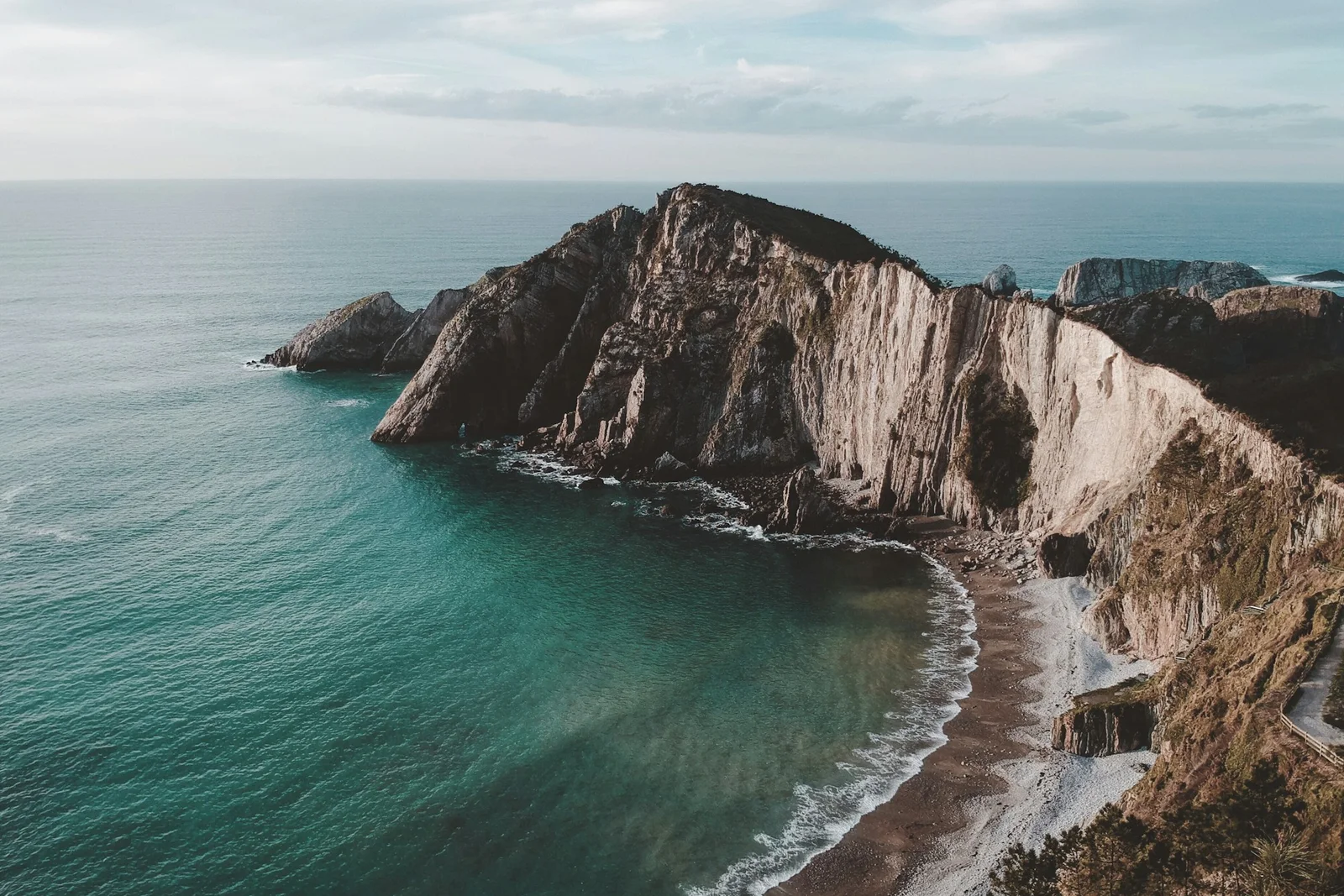
Asturias, Spain, is an autonomous community on the north coast of the country, with Galicia to the west, Cantabria to the east and the Cantabrian Sea to the north. The Picos de Europa mountains rise inland, and the climate is mild and wet, which is why the landscape is green. According to the INE, Asturias had 1,013,529 inhabitants on 1 January 2025, most of them around three cities, Oviedo, Gijón and Avilés, with fishing towns on the coast and small villages in the mountain valleys.
Where is Asturias?
Asturias is in northern Spain, on the Cantabrian coast, between Galicia and Cantabria, with Castilla y León to the south. Turismo Asturias, the regional tourism board, groups it with Galicia, Cantabria and the Basque Country as “Green Spain”. On the map, the three main cities sit close together in the middle of the coast, “only half an hour by car from each other”, according to the same source. The coast runs east and west from there, and the mountains close the region to the south.
| Asturias at a glance | |
|---|---|
| Where | North coast of Spain, between Galicia and Cantabria |
| Population | 1,013,529 (INE, 1 January 2025) |
| Capital and largest city | Oviedo (223,968) is the capital; Gijón (269,894) is the largest city (INE, 1 January 2025) |
| Mountains | Picos de Europa, with Torrecerredo at 2,650 m (Turismo Asturias) |
| Airport | Asturias Airport, in Castrillón: 47 km from Oviedo, 40 km from Gijón and 14 km from Avilés (Turismo Asturias) |
| Madrid by train | Between 3 h 11 min and 3 h 31 min to Oviedo, depending on the train (Renfe open timetable data, 14 October 2026) |
| Climate | Mild, with rain in every month: 9.4 °C in January and 18.8 °C in August on average at Asturias Airport (AEMET) |
Which parts of Asturias are there?
Asturias divides into four zones that differ in pace, services and transport: the central cities, the eastern coast, the western coast and the mountain interior. The population figures below are from the INE municipal register at 1 January 2025.
| Zone | Examples | Pace | Getting around |
|---|---|---|---|
| Central cities | Oviedo, Gijón, Avilés: 569,379 residents between them, 56% of the region | Urban, with the head of each of the three health areas | Commuter trains from Oviedo reach Gijón in a median 33 minutes and Avilés in 37; high-speed trains to Madrid leave from Oviedo |
| Eastern coast | Llanes (13,486), Ribadesella (5,591) | Seaside towns with the Picos de Europa behind them | In Ribadesella, the A-8 motorway and the Oviedo-Santander narrow-gauge line; Asturias Airport is about 100 km away, according to its town council |
| Western coast | Cudillero (4,867), Valdés (10,776) | Small harbours and cliff-sheltered beaches | Asturias Airport is in Castrillón, 14 km from Avilés |
| Mountain interior | Cangas de Onís (6,344), Cangas del Narcea (11,282) | Valleys, nature reserves and few neighbours | Check transport and services town by town |
The commuter times are the median of the Cercanías Asturias trains in Renfe’s open data, downloaded on 14 October 2026. For a flat with services at the door and no need for a car, the central cities are the usual choice; for a quieter town, the eastern coast, where Ribadesella is the best-known example.
The main cities: Oviedo, Gijón and Avilés
Oviedo is the capital, with 223,968 inhabitants. Turismo Asturias describes its Pre-Romanesque buildings as a UNESCO World Heritage Site and lists the cathedral and the museums of fine arts and archaeology in its historic quarter.
Gijón is the largest city, with 269,894 inhabitants, and a port. San Lorenzo beach runs for almost two kilometres along the promenade, and the old fishermen’s quarter of Cimadevilla sits on the headland beside it, according to its tourism page.
Avilés has 75,517 inhabitants. Its historic quarter is one of the best preserved in Asturias, and it is the closest city to the airport, 14 km away. The Niemeyer Centre, designed by the Brazilian architect Oscar Niemeyer, stands on the estuary.
Asturias beaches
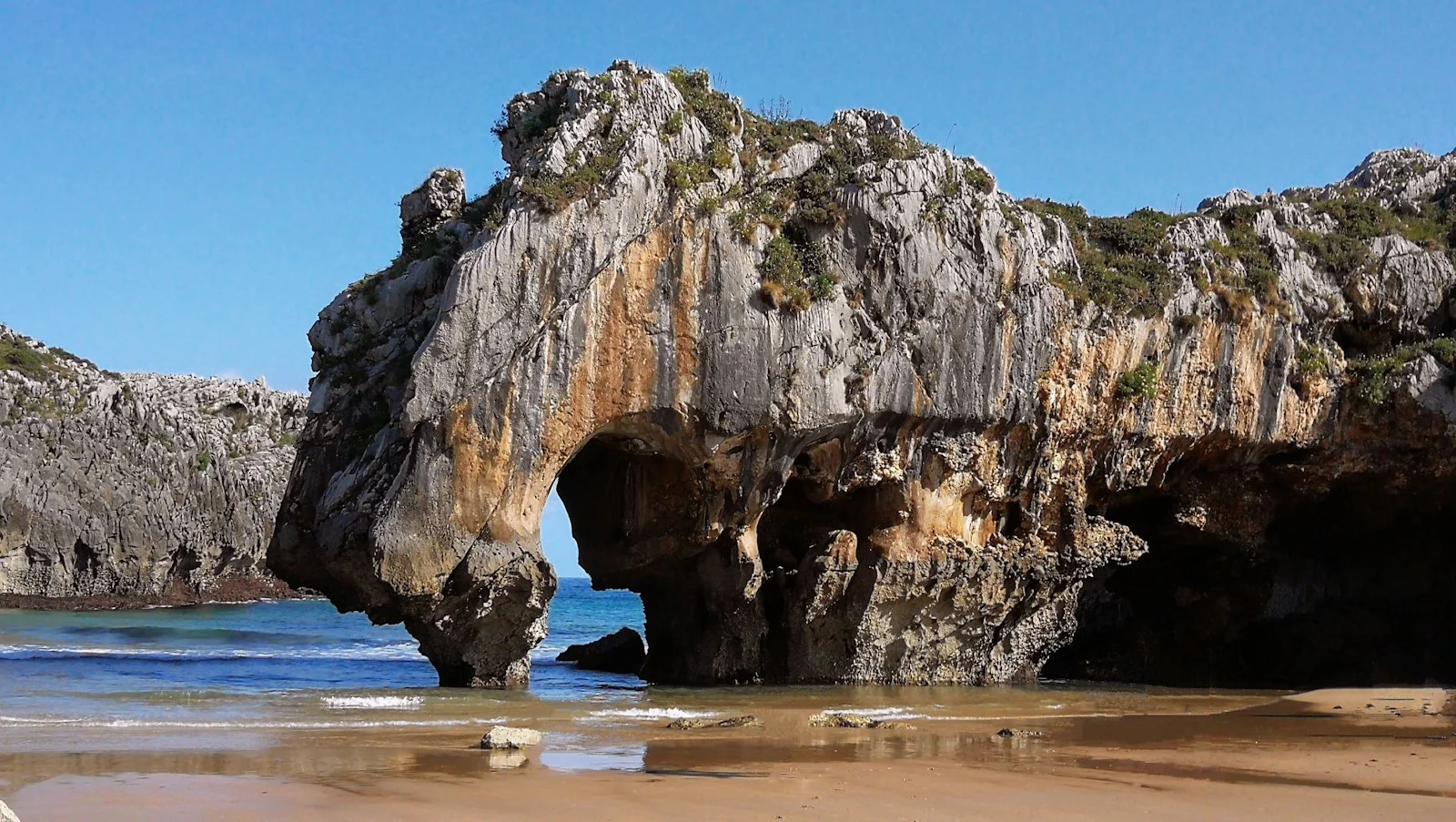
Asturias beaches face the Cantabrian Sea, so the tide changes how a beach looks and how you use it, and Turismo Asturias notes that the effect is strong at some beaches, such as Frejulfe in the west. The official beach guide groups them by area, and three types cover most choices:
- Urban beaches next to services, such as San Lorenzo in Gijón. They suit a flat in the city, where the beach is a short walk from home.
- Open beaches with surf, such as Salinas in the centre of the coast or Penarronda in the west, where waves matter more than comfort.
- Sheltered coves and estuary beaches, such as Po in the east, with calm water, or Rodiles in the Villaviciosa estuary, over a kilometre of golden sand with showers and a rescue service.
The guide also lists La Griega, where dinosaur footprints are visible, and Gulpiyuri, a beach of about 40 metres that sits inland and is reached by the sea through the cliffs. For the beaches around Ribadesella, see our guide to Ribadesella.
Asturias weather and when to go
Asturias has a mild, wet climate, with rain in every month. At Asturias Airport, an AEMET station on the central coast, the 1981-2010 normals give an annual mean of 13.5 °C, with 9.4 °C in January and 18.8 °C in August, and 1,062 mm of rain a year. The wettest month is November, with 134 mm, and the driest is July, with 47 mm.
A coastal station at 127 m does not represent the mountains. For living there, the practical effect of the rain is on the flat itself: look at ventilation, heating and orientation when you compare homes, because the climate is the same for every flat in an area and the comfort inside is not.
Getting to Asturias from the UK
You can reach Asturias by air, by ferry plus a drive, or by flying to Madrid and taking the train. Flights are the quickest option: Asturias Airport handled 2,051,342 passengers in 2025, 458,982 of them on international flights, according to Aena (13 January 2026). Airlines and routes from the UK change by season, so check the airport’s flight information and the airlines’ own sites before you plan.
- Other airports. Santander and Bilbao are the alternatives, at about 120 km and 220 km from Ribadesella respectively, according to its town council. Aena runs both airports.
- Ferry. Brittany Ferries sails from Portsmouth or Plymouth to Santander, and describes Asturias as “just a few hours’ drive” from there. Check the operator for crossing times and dates.
- Train from Madrid. High-speed trains run between Madrid and Oviedo several times a day, according to Turismo Asturias, and the 14 October 2026 timetable data show journeys of between 3 h 11 min and 3 h 31 min.
Living in Asturias and buying a home there
Asturias has an older population and cheaper housing than the Spanish average. According to the INE’s continuous population statistics, 28.4% of residents were aged 65 or over on 1 January 2025, against 23.9% in Spain as a whole. In the Ministry of Transport’s appraised value series, the average for free-market housing in the second quarter of 2026 was €1,798.5 per square metre in Asturias and €2,355.0 in Spain, and the Asturian figure had risen 14.0% in a year. Appraised value comes from valuations and is not an asking price or the price on a deed.
Public health care is organised in three areas, centred on Avilés, Oviedo and Gijón, under the 2025 health map approved by Decree 86/2025. To compare Asturias with the rest of Spain, see our guide to the best places to live in Spain.
If you come from the UK, residence, work, health care, taxes and pensions each have their own rules. The UK government’s Living in Spain guide, updated on 3 July 2026, covers them, and it is the place to check your own case before you move.
When you consider a new-build flat, three things are worth checking with your lawyer or notary before you pay anything:
- Guarantee of your payments. Under the first additional provision of Spain’s Building Act, once the building licence exists the developer must guarantee the return of the money you pay in advance, with an insurance policy or a bank guarantee, and keep it in a separate account.
- Warranties. The same act sets one-year, three-year and ten-year guarantees against construction defects, the longest for structural elements.
- The documents. The licence, the contract and the registered title should match the home you are buying.
FAQs about Asturias, Spain
Is Asturias worth visiting?
Yes, if you want a coast, mountains and cities in the same trip. Oviedo, Gijón and Avilés are half an hour from each other by car, the Picos de Europa reach 2,650 m, and the Turismo Asturias describes the coast as “the best preserved in Spain”.
Is Asturias expensive?
Housing costs less than the Spanish average. The appraised value of free-market housing in the second quarter of 2026 was €1,798.5 per square metre in Asturias against €2,355.0 in Spain, although the Asturian figure rose 14.0% in a year.
Does it rain a lot in Asturias?
Yes, in every month. At Asturias Airport the 1981-2010 normals show 1,062 mm a year, with 134 mm in November and 47 mm in July.
How far is Asturias from Madrid?
By train, Oviedo is between 3 h 11 min and 3 h 31 min from Madrid-Chamartín, depending on the train, in Renfe’s open timetable data of 14 October 2026.
Can you live in Asturias year round?
Yes. More than a million people do, and the central cities have the head of each health area and the rail links to Madrid. Outside the cities, check transport and services for the specific town, since some valleys depend on the car.
A home in Asturias
At AYCO we have two new-build developments in Asturias. According to its page, Las Terrazas de Ribadesella has 61 one-, two- and three-bedroom homes on Carretera de la Estación, a five-minute walk from the train station. AYCO Residencial Naranco offers one- and two-bedroom flats in El Naranco, in Oviedo, with the train station six minutes away by car and the bus station four minutes on foot, according to its page. If you are considering buying in Asturias, you can request information from either one.