

Oviedo, Spain: what it is like to live in the Asturian capital
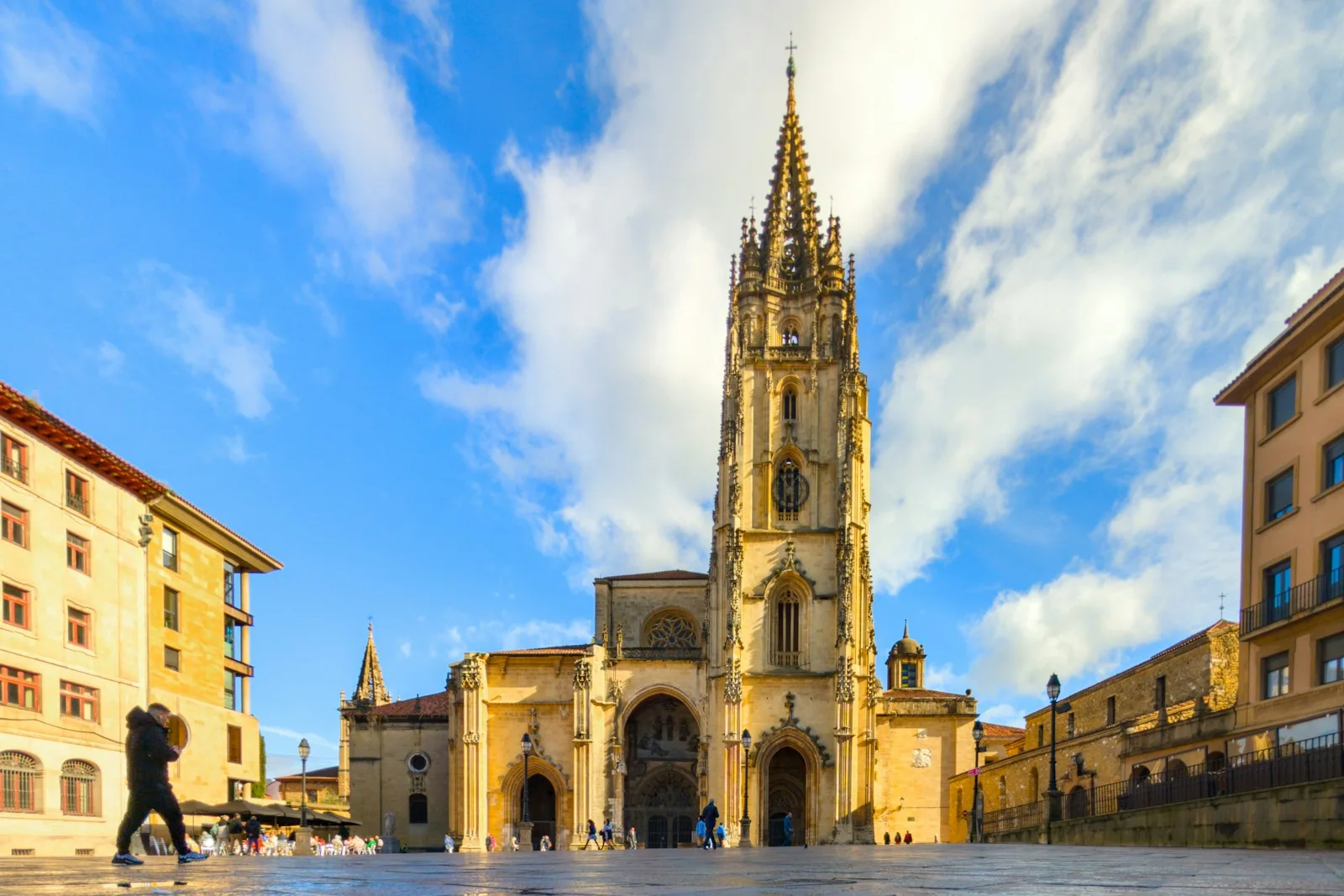
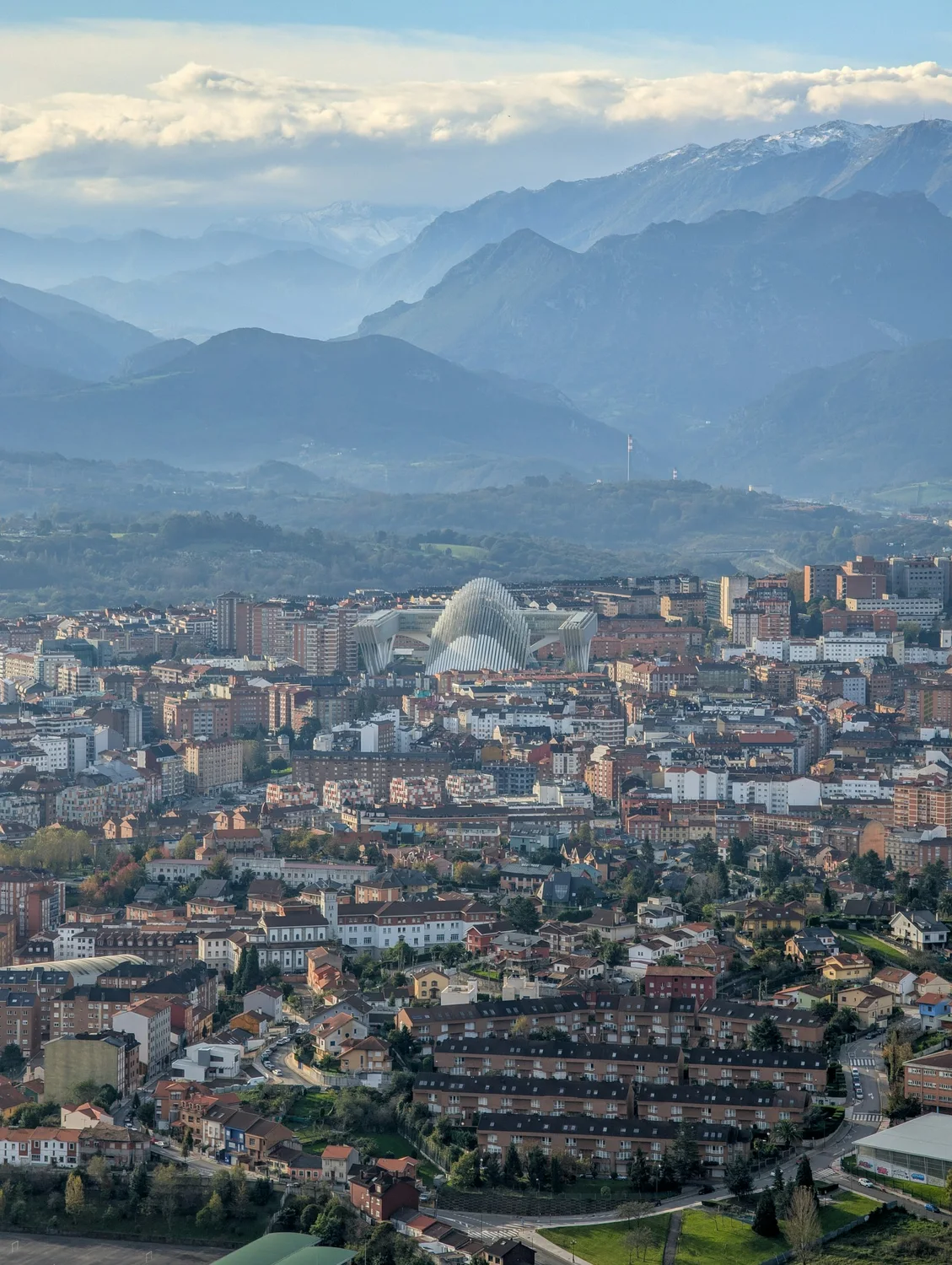
Oviedo, Spain, is the capital of Asturias, a region on the north coast with a green, temperate landscape rather than the dry heat of the Mediterranean. It is a city of 223,968 people (official figures, 2025): big enough for the area you choose to matter, and small enough to live in without a car. Life here means rain and mild summers, a historic centre you can cross on foot, and the sea within reach.
Oviedo, Spain at a glance
| Where | Capital of Asturias, northern Spain |
| Population | 223,968 (2025) |
| Districts | Six urban and two rural |
| Climate | Oceanic: 13.3 °C average over the year, 960 mm of rain |
| Trains | Commuter and regional services from Oviedo station |
| Airport | Asturias Airport, with an Alsa bus to Oviedo |
Where is Oviedo?
Oviedo sits in the centre of Asturias, which makes it a good base for both the Picos de Europa mountains and the coast. The A-8 motorway takes you to Asturias Airport, and Alsa buses link the airport with Oviedo, Gijón and Avilés. For a taste of the coast, our guide to Ribadesella, Spain covers a seaside town in eastern Asturias.
What is it like to live in Oviedo?
The old town is pedestrianised and a pleasure to walk around. Beyond it, the city is split into six urban districts served by TUA, which has run the municipal buses since 1981. Its buses are low-floor with a wheelchair ramp, and many stops show real-time arrivals.
If you live in a flat, the questions that matter are practical ones. Which bus stop is at your door? How far is the station? Is there a lift? The sections below help you answer them for any address.
Oviedo neighbourhoods: where people live
Oviedo’s neighbourhoods are grouped into districts:
| District | Neighbourhoods and areas |
|---|---|
| Urban 1 | Centro y casco histórico (the centre and old town) |
| Urban 2 | Ciudad Naranco, Vallobín, La Florida, Las Campas, San Claudio (urban part) |
| Urban 3 | La Monxina, Guillén-La Fuerza, La Corredoria |
| Urban 4 | San Lázaro, Otero, Tenderina, Fozaneldi, Ventanielles, Colloto (urban part) |
| Urban 5 | La Argañosa, La Ería, Buenavista, El Cristo, Montecerrao, Olivares |
| Urban 6 | Pumarín, Teatinos, Pando-Oviedo, El Pontón de Vaqueros |
The two rural districts take in the villages of the municipality, among them Naranco rural, not to be confused with the urban neighbourhood of Ciudad Naranco. When you compare areas, look at how you would get around from each one: TUA has the lines and timetables for every route.
Climate: what to expect
Oviedo has a mild, wet oceanic climate. Averages from AEMET, the Spanish weather agency, give 13.3 °C over the year and 960 mm of rain at its Oviedo station, 336 m above sea level (1981-2010).
| Month | Average temperature | Rainfall |
|---|---|---|
| January | 8.3 °C | 84 mm |
| July | 18.7 °C | 45 mm |
| August | 19.1 °C | 56 mm |
| November | 10.9 °C | 115 mm |
In practice, summers are warm rather than hot, and rain is spread across the year, with about 122 days of 1 mm or more. November is the wettest month and July the driest. When you choose a flat, a lobby with room for wet coats and umbrellas and a bus stop close to the door matter more here than a swimming pool.
Getting around Oviedo
Within the city, the bus is the main way to get around. Oviedo station adds commuter and regional trains, and the interurban bus station connects the city with the rest of Asturias. Check Renfe’s website for the lines and timetables you would use. If you drive, the A-8 is the road to the airport, but the old town is best explored on foot.
Getting to Oviedo from the UK
Asturias Airport (OVD) serves the city, and Aena, the airport operator, lists its destinations and airlines. Direct routes from the UK change by season, so check that list before you plan a trip. From the airport, an Alsa bus runs to Avilés, Gijón and Oviedo roughly every hour between 6:00 and midnight.
If there is no suitable direct flight, other airports in northern Spain and the ferry are options. Brittany Ferries sails from Plymouth to Santander in about 20 hours; from there, the rest of the journey is by road or rail.
What to see in Oviedo
The old town, with its medieval feel, is the first stop, and Cimadevilla is its oldest part. Visits usually start at the cathedral, built in flamboyant Gothic style. Oviedo also has some of the region’s key pre-Romanesque buildings, including Santa María del Naranco, several of them UNESCO World Heritage Sites. Cider is part of local life, and many of the old town’s porticoes are places to pour natural cider.
Buying a home in Oviedo
If you are thinking of buying a flat in Oviedo, start by checking which district an address belongs to and which bus lines stop nearby. Ask the developer for the official documents of any development before you decide, and take tax and legal questions to an independent adviser in Spain.
AYCO has a new-build development in Calle Almacenes Industriales, in the lower part of Ciudad Naranco, right by the station. The train station, the bus station and Calle Uría, the main shopping street, are about a 7-minute walk away, and several state, state-funded and private schools are 11 to 15 minutes away on foot. From the station, local trains reach Llamaquique, where the courts and the regional government offices are, in two minutes. For walks, the Naranco hillside is close: its fitness trail, the pista finlandesa, starts a quarter of an hour away. The building has one- and two-bedroom flats, and you can see the plans on the Naranco development page.
Before you move
If you are planning more than a short stay, start with the UK government’s entry requirements for Spain. British passport holders can spend up to 90 days in any 180-day period in the Schengen area, which includes Spain, without a visa; a longer stay means meeting Spain’s own requirements for visas, residence and registration. To weigh Oviedo against other regions, see our guide to the best places to live in Spain.
FAQs about Oviedo, Spain
Where is Oviedo?
Oviedo is the capital of Asturias, in northern Spain, and has 223,968 inhabitants.
Does it rain a lot in Oviedo?
Yes. Oviedo gets around 960 mm of rain a year, with about 122 days of 1 mm or more. Summers are mild, with an August average of 19.1 °C.
What is the nearest airport to Oviedo?
Asturias Airport (OVD). An Alsa bus connects it with Oviedo, Gijón and Avilés roughly every hour between 6:00 and midnight.
Are there direct flights from the UK to Oviedo?
It depends on the season and the airline. Aena lists the current destinations from Asturias Airport, and the airlines publish their own schedules.
How many districts does Oviedo have?
Six urban districts and two rural ones.
How can you move around Oviedo without a car?
By bus, with TUA’s urban network, and by train from Oviedo station. Check tua.es and renfe.com for current lines and timetables.
A home in Oviedo
If you are considering a flat in the city, see the plans and details of AYCO’s development in Naranco, or get in touch with the team.