

Senior living in Spain: how it works and what to check
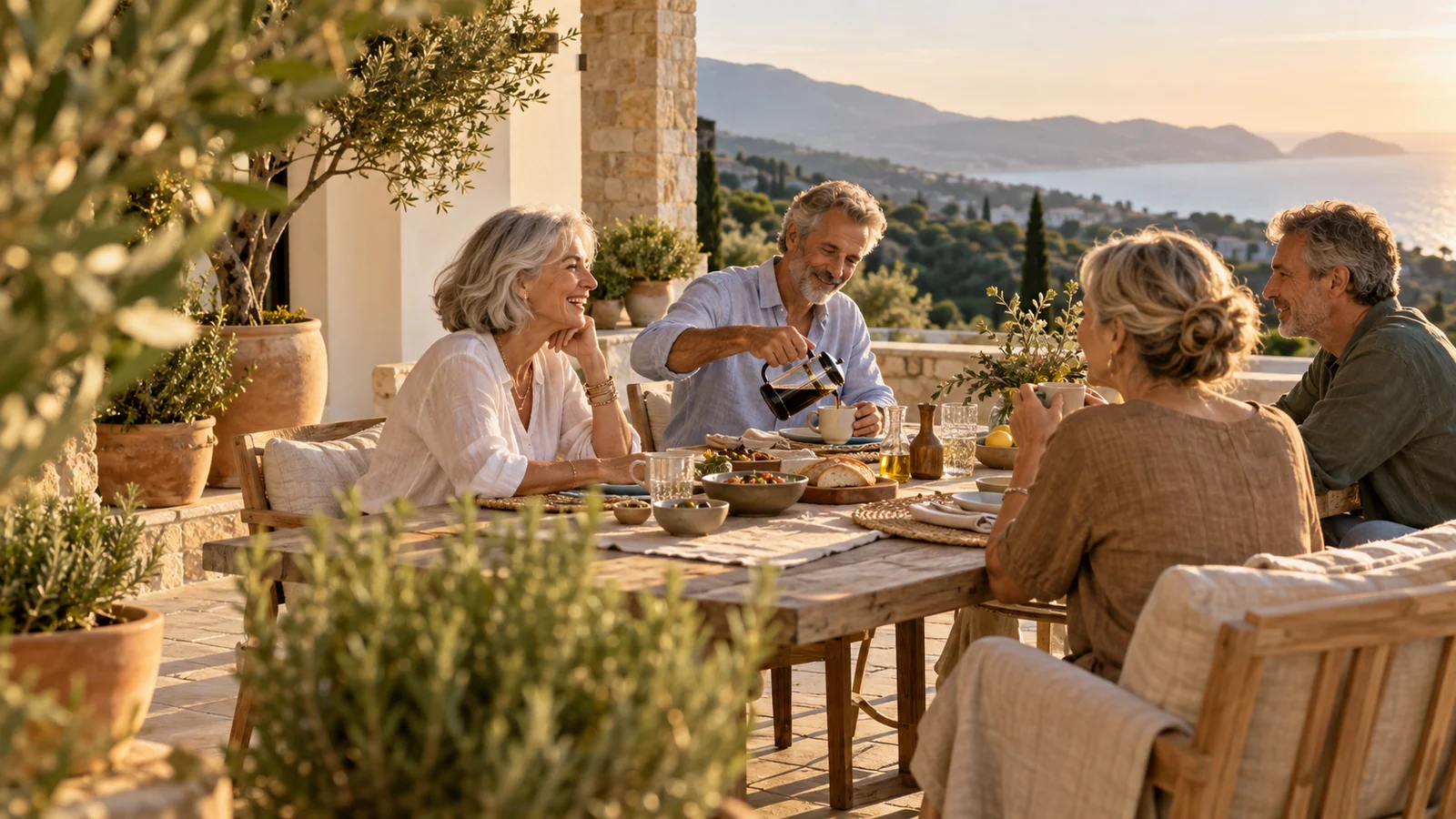
Senior living in Spain, or independent senior living, refers to property developments designed for older people, or people approaching that stage, who are fully independent in medical terms. They look in these settings for an active life and a dynamic community, with a layer of services aimed at making life easier. The model is still new in Spain, and its terms do not map neatly onto UK options such as retirement villages or extra care. Spain is already home to more than 510,000 foreign residents over 65, with British and German nationals the largest groups, according to CBRE.
What senior living means in Spain
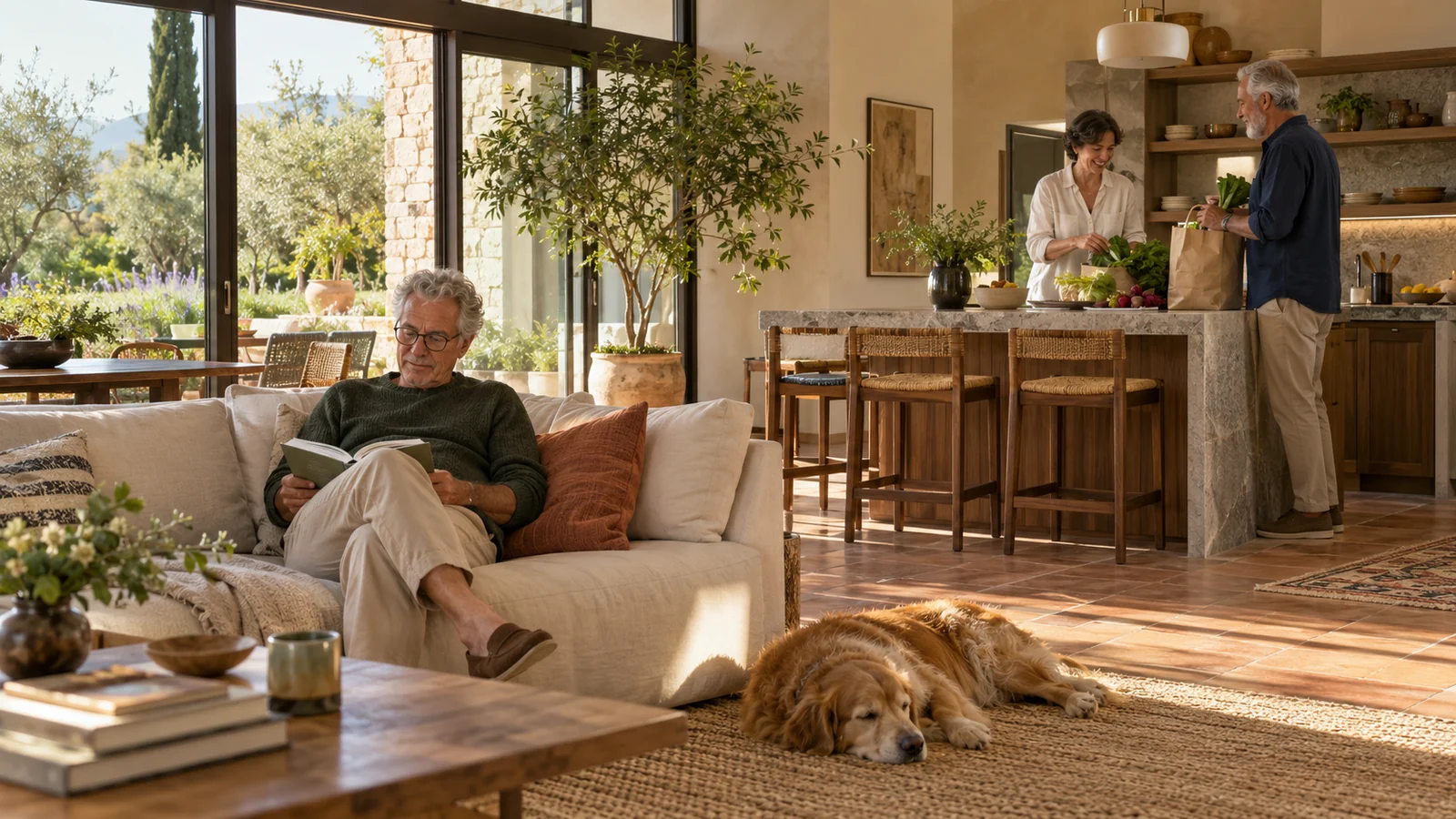
Each resident has their own apartment, with their own front door, and shares communal areas such as lounges, gardens, a gym or a restaurant with the rest of the community. What sets senior living apart from an ordinary apartment building is the services, and the operator, the company that looks after the community, is the one that runs them and the building day to day.
The usual arrangement is renting, with a monthly fee that covers the home and the basic services. In other models, the apartments are sold and the owner pays a separate fee for the services. Either way, the operator runs the building day to day: reception, maintenance, cleaning of common areas, activities and any extra services residents choose.
Senior living in Spain vs UK retirement options
The closest UK equivalents are retirement villages and sheltered housing, but the match is not exact.
| UK option | What it is (Age UK) | Closest option in Spain |
|---|---|---|
| Sheltered or retirement housing | Housing to buy or rent with support such as staff, emergency alarms and social activities | Senior living, or “apartamentos con servicios” |
| Retirement village | Large schemes set out like a village, with shops, restaurants, gyms or pools; personal care often available | Larger senior living schemes and “senior resorts” |
| Assisted living or extra care | Your own flat, with care staff available up to 24 hours a day | No single equivalent; some senior living schemes add care services |
| Care home | Help with washing, dressing and medication; nursing homes add 24-hour nursing | “Residencia de mayores”, regulated by each region |
Spain also has “pisos tutelados”, supervised flats run as a social service for older people who cannot stay in their current home. They are not the same as senior living, which is a private model for people who choose to move.
One practical difference: senior living has no specific national regulation in Spain. Each scheme relies on the housing, consumer and service rules that apply to it, so the contract matters even more than in the UK.
What’s included, and what isn’t
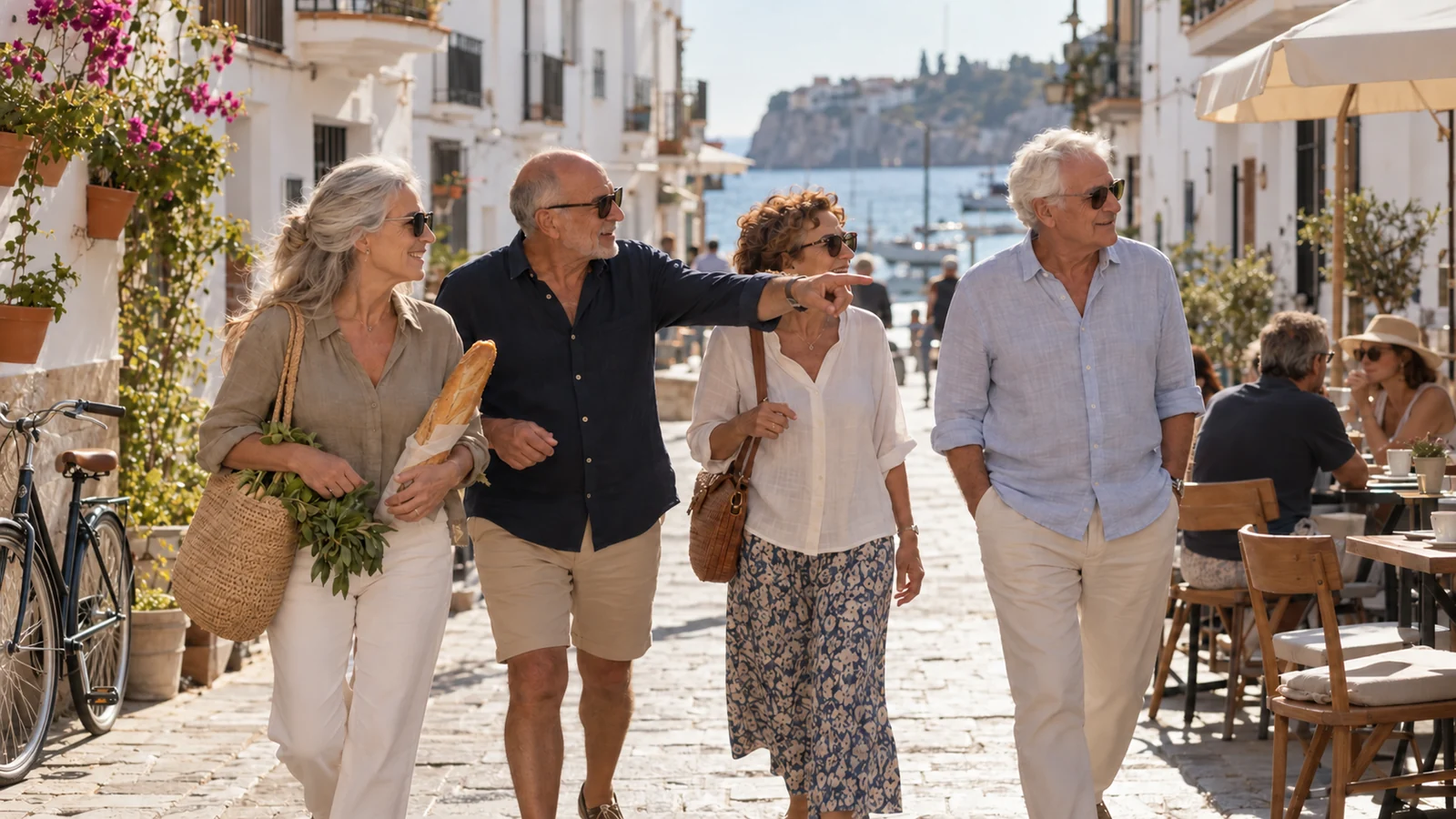
Every scheme sets its own terms, but most work on three levels:
Usually included in the fee
- A private, adapted apartment
- Use of communal areas
- Reception and an alarm or help system
- Building maintenance
- Activities and community life
Usually optional
- Meals
- Cleaning inside the apartment, laundry
- Physiotherapy, hairdressing, personal services
- Home help, arranged separately
- Transport
Not part of senior living
- Continuous medical care
- Permanent care for dependent residents
- Daily medical supervision
Senior living is for living independently. If you come to need round-the-clock care, the answer in Spain is a residencia. Ask each scheme how it handles that situation before you sign.
How costs work
Three things drive the monthly fee: the apartment itself, the services included and the location. A two-bedroom apartment costs more than a one-bedroom one in the same building, a fee that includes meals and cleaning costs more than one that doesn’t, and a city centre or seafront scheme costs more than one in a mid-sized town.
For reference, a 2021 Savills Aguirre Newman report put basic monthly rents between €1,600 and €2,000, with schemes from around €700, in senior apartment models in purely urban settings, and others close to €5,000, in communities closer to luxury. Sale prices ran from €50,000 to more than €500,000, plus the service fee. Those figures are from 2021: the market has changed a lot since, above all in the type of schemes being designed.
When you compare, add up what your current home costs you each month: service charges, utilities, maintenance, cleaning, insurance and any adaptations it will need in a few years.
Before you move: residency, healthcare and pensions
Retiring to Spain from the UK involves paperwork that has nothing to do with the home you choose. The UK government’s guide to living in Spain sets out the steps, and these are the three to check first:
- Residency. Since Brexit, you need the right visa or residence permit, and there are routes for people who want to retire in Spain. Once there, you register with the town hall (“empadronamiento”) and get your residence card (TIE). Different rules apply if you lived in Spain before 1 January 2021.
- Healthcare. If you receive a UK State Pension and live in Spain, your healthcare may be funded by the UK through an S1 form registered with the Spanish social security. The gov.uk page on healthcare in Spain explains how.
- State Pension. The UK State Pension can be paid in Spain and rises every year, because Spain is in the European Economic Area.
For tax and pension planning, speak to a qualified adviser before you commit.
What to check in a senior living project
Before you sign, get written answers to these questions:
- Who is the operator? How long have they run senior living, and where?
- What does the fee include? Which services are included, which are optional, and at what price?
- What does the contract say? Length, how the fee is reviewed, notice to leave and what happens if your health needs change.
- Is there English-speaking staff? And how many residents speak your language?
- Is the whole building accessible? Lifts, showers, corridors, outdoor areas.
- What is nearby? A health centre, pharmacy, public transport, shops and places to walk.
- Are there links with care services? In case you need help at home later on.
Visit at different times of day and talk to residents. It tells you more than any brochure.
AYCO and senior living
In a conventional development, the developer hands over the keys and, it could be said, its role ends. In senior living, owner and operator keep a fundamental role from day one, and the operator becomes the resident’s point of contact with the community: it decides how a night-time incident is handled or how coexistence is looked after.
That is why we work with an operator: in November 2025 we signed an agreement with Alta Vita Hospitality, the senior living operator promoted by AYCO and Hesperia World, which has been involved in the design of our senior living developments from the start. It is fundamental for us to bring in Alta Vita’s view of how the future resident community will work, both to design the spaces and to reduce the building’s management and maintenance costs. Senior living is one of several housing models with services we work with.
FAQs about senior living in Spain
Can British retirees live in senior living in Spain?
Yes, as long as they have the right to live in Spain. Since Brexit that means holding the appropriate visa or residence permit. The gov.uk guide to living in Spain explains the options.
Is senior living in Spain rented or bought?
There are several models: from buying the home outright, with a fee for care services, to buying lifetime usufruct rights, which are not passed on to heirs. The most common model in new independent senior living developments is renting: a monthly fee that includes the home and basic services, with the option to add extra services depending on personal interests or circumstances.
Does senior living include medical care?
Not on a continuous basis. There is a reception, an alarm system and, in many schemes, access to care services you can pay for. Continuous care is provided by a residencia.
How is senior living different from a care home?
Senior living is for independent people who want their own home with services and a community around them. A care home, or residencia, provides personal and health care for people who need it every day.
Next steps
If you are weighing up senior living in Spain for yourself or a relative, start with the checklist above and visit more than one scheme. We are developing our senior living line with Alta Vita; to hear about future projects, get in touch.